US participation · millions

A letter to Asia's pickleball community · September 2026
Connecting Asia's Pickleball Community
Two shores, one bridge. Pickleball reached Asia fast — the next chapter should be written here, by the people who play here.
The thesis · written from Asia
The next chapter, written here.
Pickleball reached Asia fast, and it brought a rulebook written somewhere else. The next chapter should be written here — by the people who play here, in all the languages they play it in.
Players & coaches · Equipment · Venues · Tournaments · Protection · Travel
01 Why now
The game is moving fast.
Pickleball is scaling from a pastime into an ecosystem. Asia can grow it with the community at the centre from day one.
people across Asia have tried pickleball at least once.
growth in awareness across Asia in one year.
fast-moving markets: Vietnam, Malaysia, the Philippines and Hong Kong.
Sources: SFIA 2026 Topline Participation Report; UPA Asia × YouGov, State of Play in Asia (2025); DUPR market notes (October 2025).
02 What's missing
Growth needs a shared direction.
Everyone is growing separately.
Brands, courts, coaches and events are moving quickly. Without a common voice, the biggest marketing budget can become the loudest definition of quality.
Protection is still a blind spot.
The sport can bring years of movement and connection, especially to older players. Safer courts, smarter coaching and better preparation should grow with it.
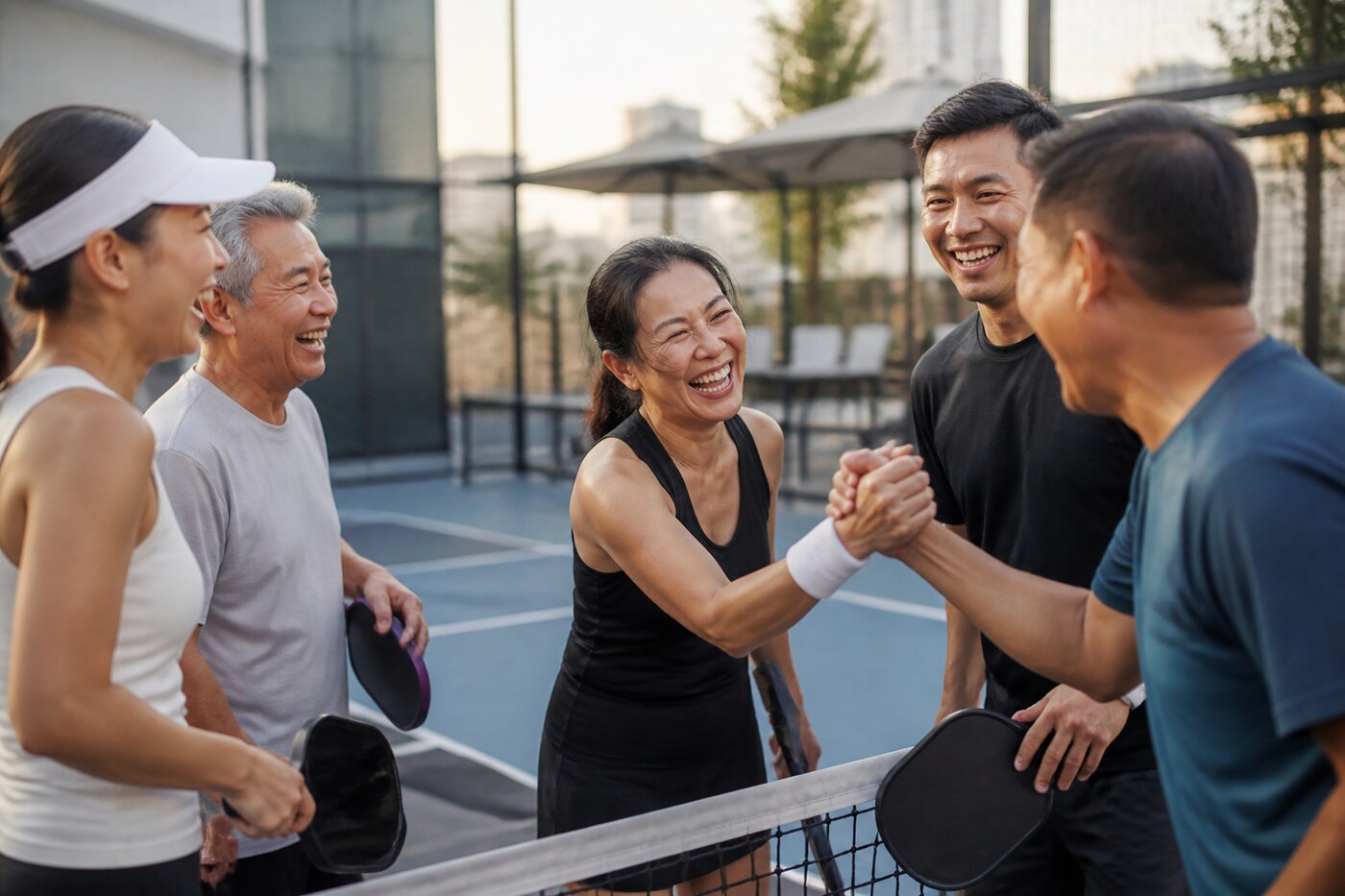
Our belief is simple: the players should have a say.
2½ Local neutrality
What we will not do, and what we will.
Trust in a regional community depends on knowing where it stops. Four shores, four shapes. Bridges between every pair, and no island at the centre.
We will not
- Tell a club in Jakarta how to run its ladder, or a league in Cebu how to score its games.
- Tell a brand what a paddle must weigh, cost, or be made of to be welcome here.
- Rank cities or countries against one another, or declare any market the model for the rest.
- Import a rulebook from outside Asia and call it the regional standard.
- Sell exclusivity. No partner buys the right to keep another out.
We will
- Help the people building pickleball in each market see and hear one another.
- Share what works, in the words of the people it works for, and let each place decide what to borrow.
- Pay attention to protection and longevity — a sport that injures its most loyal players will not last.
- Speak with one voice when the region chooses to, and stay quiet when it does not.
- Keep the door open to social players, juniors and seniors — not only to those who compete.

03 The mark
A sign that you are part of the conversation.
You will see this mark on the paddles, courts, clubs and events of our founding partners. It does not mean a product passed a test, or that a venue meets a specification written in another country. It means the person carrying it has joined this community — and committed to sharing openly with the rest of the region.
- 1Designed in the openAn open design call and public vote decide the final mark.
- 2Open to every partnerPaddle brands, venues, coaches, tournaments and travel partners can carry it.
- 3Earned by participationNot by passing a test. Carried by founding partners across Asia who share what works.
The founding partner fee is US$100. That's it.
It is not a licence. It is a way of saying “I'm in” that funds this site and the small team that carries it forward. No partner pays more to get in, and no one pays to move up. The mark can't be bought, only earned.
→ What the bridge carries
How one exchange works.
Every connection brings something, and needs something. When we understand each business's real challenge, someone in this community can usually help — and neither side pays the other for the privilege.
Hong Kong
A paddle brand wants distribution in Vietnam.
Ho Chi Minh City
A venue chain wants demo gear and a sponsor.
Neither knew the other existed. Both cross the bridge. Example only — the real exchanges will come from the challenges founding partners tell us about.
04 An invitation
Join us as a founding partner.
Founding partners across all six connections — people and organisations who believe Asia's pickleball community is worth connecting, and who want to help it grow without losing what makes each place its own.
0 partners have joined the first table.
01You get a seatA vote on how the mark is defined and how this community grows.
02You get recognisedListed as a founding partner, and free to carry the mark.
03You get reachAs we connect Asia's community, we spread the word about our partners.
You do not get: exclusivity, a standard imposed on you, or a ranking against anyone else.
05 Questions
The things people ask first.
Who is behind Pickleball Asia?
Doug Choy registered pickleball.asia and wrote the founding letter — but it cannot belong to one person. “A bridge owned by one person is just a pier.” From here on it says we: a place where the people building this game in every market can find each other, hear each other in their own words, and start talking. Not to referee. Not to certify. To connect.
What does the mark mean?
It is a sign that you are part of the conversation. It does not mean a product passed a test, or that a venue meets a specification written in another country. It means the person carrying it has joined this community and committed to sharing openly with the region: what they've learned, what worked, what did not. The mark itself will be finalised with the community, through an open design call and a vote.
How is the US$100 used?
It is not a licence. It is a way of saying “I'm in” that funds this site and the small team that carries it forward. No partner pays more to get in, and no one pays to move up. The mark can't be bought — only earned.
Who can become a founding partner?
People and organisations across all six connections — players & coaches, equipment, venues, tournaments & events, protection & longevity, and travel. At every level, in every market. If you care about how the sport grows in Asia, there is a seat at the first table.
Is this a standard for Asia?
No. Asia is many languages, many peoples, many ways to play. A standard would flatten exactly the things worth keeping. We will not tell a club how to run its ladder, tell a brand what a paddle must weigh or cost, rank markets against each other, or import a rulebook from outside Asia. What Asia needs is a bridge, not a standard.
What language is this in?
English today — with Tiếng Việt, Bahasa Melayu, 中文 and Tagalog coming soon. The next chapter should be written here, by the people who play here, in all the languages they play it in.